GLP-1 Medications and Ocular health Risk

GLP-1 Medications and Ocular health Risk

GLP-1 Medications and Ocular health Risk

GLP-1 Medications and Ocular health Risk

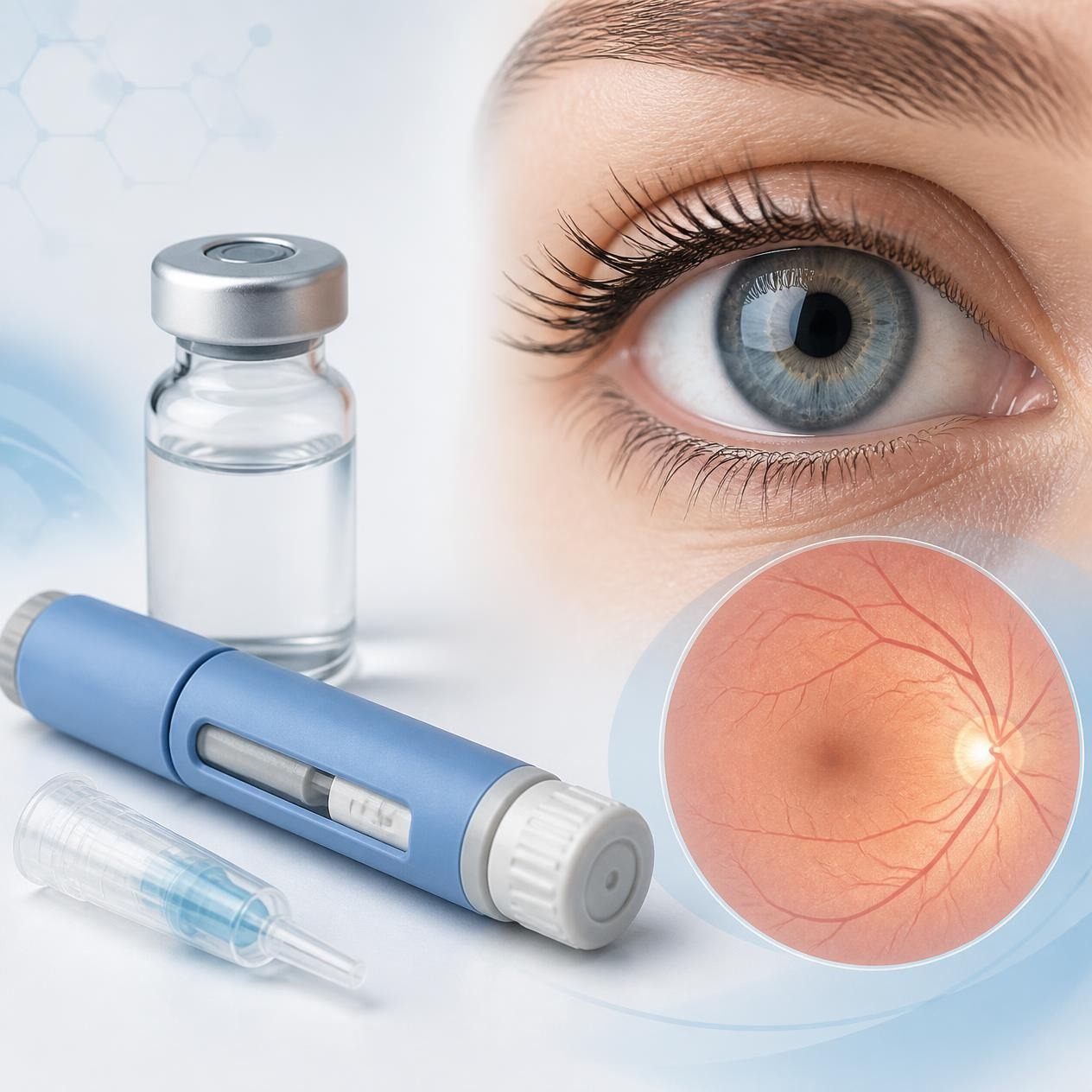
GLP-1 medications — such as semaglutide (Ozempic, Wegovy, Rybelsus), liraglutide, dulaglutide, and tirzepatide (Mounjaro, Zepbound) — have changed the way type 2 diabetes and obesity are treated. They lower blood sugar, help with weight loss, and protect the heart and kidneys. Lately, one safety question has come up: could these drugs raise the risk of a rare but serious eye problem called Optic Neuritis, more specifically NAION (nonarteritic anterior ischemic optic neuropathy)?
Here is what we know so far:
What is NAION?
NAION happens when blood flow to the optic nerve — the "cable" connecting the eye to the brain — is reduced. It usually causes sudden, painless vision loss in one eye, often noticed on waking, and the loss is often permanent. There is no proven treatment (Biousse and Newman, New England Journal of Medicine, 2015).
It is rare, affecting only a handful of people per 100,000 each year. It is more common in adults over 50, men, smokers, and people with diabetes, high blood pressure, or high cholesterol (Chatziralli et al., Graefe's Archive, 2022). Because these are the same conditions GLP-1 drugs treat, it is genuinely hard to tell whether the drug causes NAION or whether these patients were already at higher risk.
What the research shows
The evidence is mixed, but points to a small possible increase in risk, mainly with semaglutide and the overall chance is still very low.
Some large studies found GLP-1 users had a somewhat higher risk of NAION than people on other diabetes drugs, but the difference was small, roughly a few extra cases per 10,000 people (Reynolds et al., Annals of Internal Medicine, 2026; Noh et al., Diabetes Care, 2026).
A review of these studies estimated about 1 extra case per 7,000 people treated per year (Chrzanowski et al., PLoS Medicine, 2026).
On the other hand, pooled data from large, carefully controlled clinical trials of nearly 97,000 people found no increase in NAION compared with placebo (Vilsbøll et al., British Journal of Ophthalmology, 2026).
Why might there be a link?
No cause has been proven. The leading idea is that lowering blood sugar quickly may briefly affect blood flow to a vulnerable optic nerve. Most reported cases happened within the first year of starting treatment.
What the experts recommend
In 2026, two major eye-care groups- the North American Neuro-Ophthalmology Society and the American Academy of Ophthalmology issued joint guidance (DeParis et al., Ophthalmology, 2026). The key messages:
There is limited reason to stop taking GLP-1 medications due to NAION risk.
The possible risk is small and not proven.
Decisions about starting, continuing, or stopping should be made together with your care team, weighing the clear benefits against a small, uncertain eye risk.
What this means for you
The benefits of GLP-1 medications are real and well proven. For most people, they far outweigh this small, unconfirmed eye risk.
The risk is very low- at most a few extra cases per 10,000 people, if the link is real at all.
Talk with your doctor if you are higher risk- for example, if you are over 50, a smoker, or have had NAION in one eye before.
Get emergency eye care for any sudden, painless vision loss. Let your care team know right away.
The bottom line
There is a small possible link between GLP-1 drugs, especially semaglutide and NAION, but it is not proven, the risk is very low, and the benefits of these medications are large.


Our Services
Contact Info
Hours of Operation
- Monday 8:30 AM - 5:00 PM
- Tuesday 8:30 AM - 7:00 PM
- Wednesday 8:30 AM - 5:00 PM
- Thursday 10:00 AM - 7:00 PM
- Friday 8:30 AM - 4:00 PM
- Saturday 9:00 AM - 12:00 PM
(Select Saturdays, by appointment only) - Sunday Closed
© 2026 Polaris Eye Care. All rights Reserved. Accessibility Statement - Privacy Policy - Sitemap
Powered by: